
Is Offshoring Compliant for Australian Mortgage Brokers?
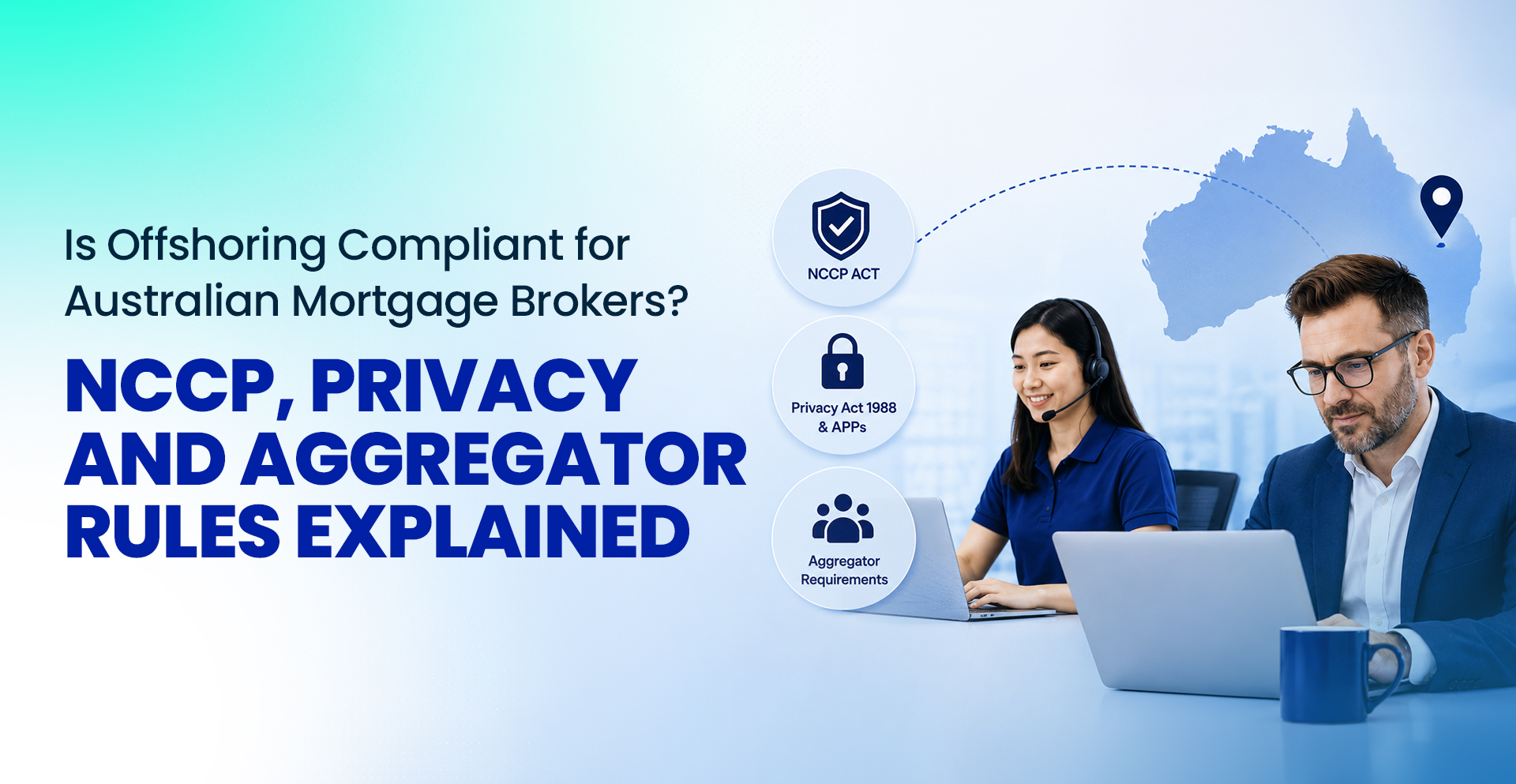
Yes, offshoring can be compliant for Australian mortgage brokers when it is structured correctly. Mortgage brokers remain responsible for meeting their obligations under the National Consumer Credit Protection Act 2009 (NCCP Act), the Privacy Act 1988, and their aggregator requirements, regardless of where their team members are located. The key is ensuring offshore staff work within clearly defined responsibilities, appropriate supervision, and secure information handling.
For many mortgage brokers, the question is no longer whether offshore staffing works. It's whether it can be done without creating compliance risks.
That's a reasonable concern. Mortgage brokers handle sensitive client information, operate within a regulated industry, and remain accountable for the quality of the credit assistance they provide. Moving part of that work offshore naturally raises questions about legal obligations, privacy, and aggregator expectations.
The good news is that offshoring itself is not prohibited under Australian law. What matters is how your offshore team is recruited, trained, supervised, and integrated into your business.
This guide explains how the National Consumer Credit Protection Act (NCCP Act), the Privacy Act 1988, ASIC guidance, and common aggregator expectations apply to offshore staffing. It also outlines which tasks offshore team members can perform, where broker responsibility begins and ends, and the practical controls that help mortgage businesses remain compliant.
Once you've established that offshore staffing can be implemented compliantly, the next decision is how to structure your team. Our Ultimate Guide to Hiring Onshore vs. Offshore: Salary, Benefits & Operations Breakdown compares salary benchmarks, employment costs, and operational considerations to help Australian mortgage brokerages evaluate the right staffing model.
What does the NCCP Act say about offshore staff?
The NCCP Act does not prohibit Australian mortgage brokers from employing offshore staff. Instead, it places responsibility on the Australian credit licensee or authorised credit representative to ensure all credit activities comply with the law, regardless of where support staff are located.
The National Consumer Credit Protection Act 2009 (Cth) establishes the obligations for Australian credit licensees and credit representatives. It requires brokers to provide responsible lending, act efficiently, honestly and fairly, maintain appropriate records, and comply with their licence conditions.
Importantly, the legislation focuses on who is responsible for the credit activity, not where supporting administrative work is performed.
This means an offshore team member may assist with many parts of the loan process provided the licensed broker maintains appropriate oversight and ensures all regulated credit assistance remains the responsibility of authorised individuals.
For example, an offshore team member may:
- Prepare loan application documentation
- Collect supporting documents
- Follow up outstanding conditions
- Update CRM records
- Prepare lender submission packs
- Support post-settlement administration
The licensed broker remains responsible for:
- Assessing suitability
- Providing credit assistance
- Making lending recommendations
- Meeting responsible lending obligations
- Reviewing and approving work before it reaches the client
ASIC expects Australian Credit Licence holders to maintain appropriate governance, supervision and risk management over outsourced functions. Outsourcing operational work does not transfer legal responsibility.
For brokerages, this means offshore staffing should be viewed as an extension of the existing team rather than a replacement for licensed decision-makers.
Do offshore staff need to be credit representatives?
Not necessarily. Most offshore support roles do not need to become credit representatives because they perform administrative and operational functions rather than regulated credit activities.
Whether someone must be appointed as a credit representative depends on the work they perform, not where they are located.
Under the NCCP Act, authorisation is generally required when a person provides credit assistance or performs regulated credit activities.
Administrative and operational support functions are different.
Many offshore mortgage professionals work successfully in roles including:
- Loan Processing
- Credit Analysis Support
- Client Administration
- Compliance Administration
- CRM Management
- Document Collection
- Lender Follow-up
- Post-settlement Administration
These activities support the lending process without replacing the broker's professional judgement.
For example, an offshore loan processor may review a file for completeness, organise supporting documentation, and prepare servicing information before submission. The licensed broker remains responsible for confirming the recommendation, assessing suitability, and ensuring responsible lending obligations have been met.
Where uncertainty exists about whether a task constitutes credit assistance, brokers should seek legal or compliance advice and confirm their aggregator's interpretation before expanding an offshore team member's responsibilities.
What tasks can offshore staff legally perform?
Offshore staff can legally perform many administrative, operational, and technical support tasks, provided they do not independently provide regulated credit assistance or make lending recommendations requiring authorisation.
In practice, offshore professionals often become an integrated part of the brokerage while the licensed broker retains responsibility for regulated advice and decision-making.
Common responsibilities include:
- Loan processing
- Credit analysis support
- Client onboarding
- Document collection
- CRM updates
- Compliance administration
- Lender follow-up
- Settlement coordination
- Post-settlement support
- Reporting and workflow administration
These responsibilities closely align with the activities outlined in VAP's 59 Tasks You Can Outsource to a Mortgage Broking Virtual Assistant, which categorises common loan processing and credit support functions performed under broker supervision.
Tasks that generally remain with the licensed broker include:
- Assessing whether a loan is unsuitable
- Providing credit assistance
- Recommending lending products
- Explaining why one product is appropriate
- Making final lending recommendations
- Signing off regulated documentation
The dividing line is whether the activity involves professional judgement that influences a client's credit decision.
Many brokerages manage this by documenting workflows that clearly distinguish administrative support from regulated credit activities.
This approach allows businesses to scale while maintaining consistent oversight.
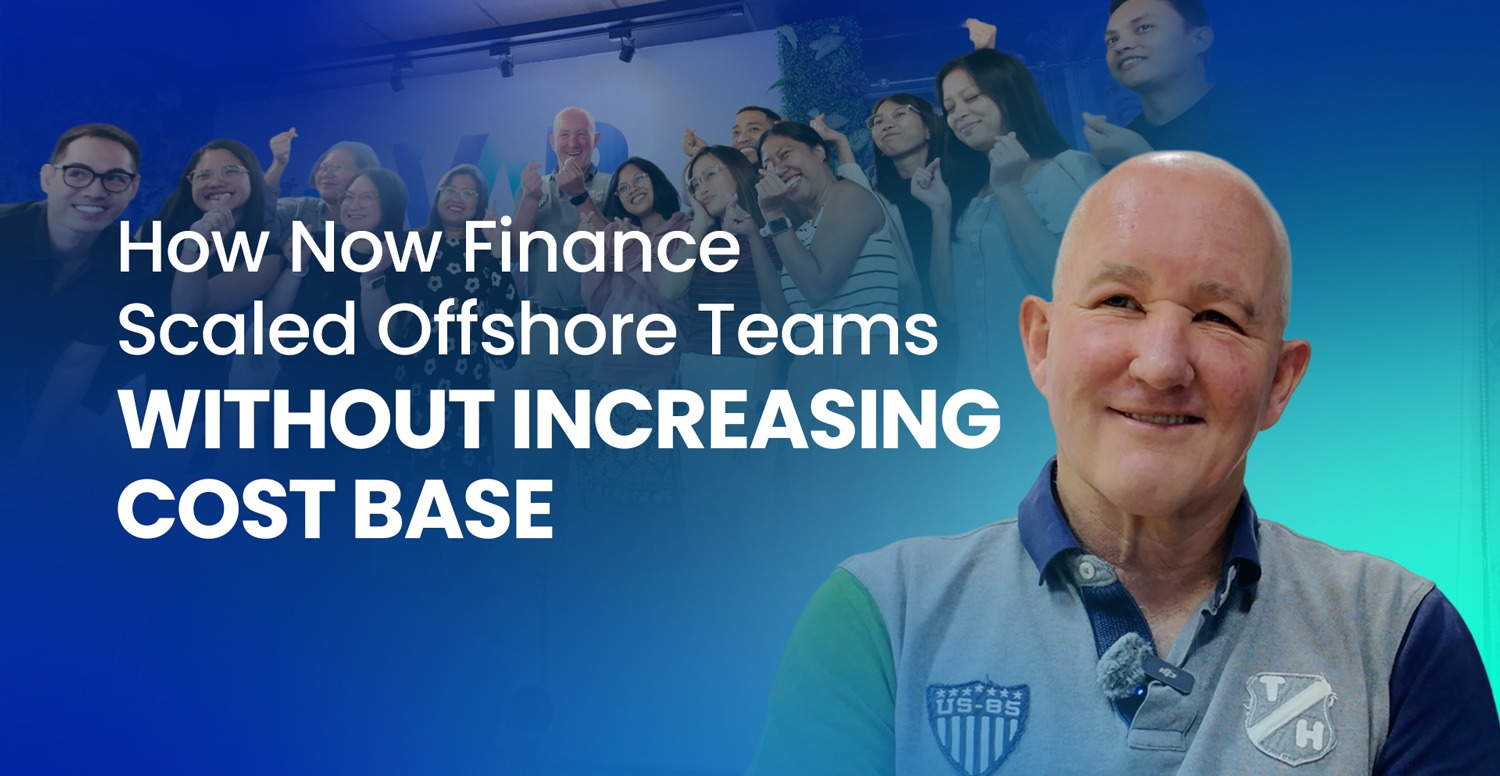
One example is NOW Finance. Beginning with a single offshore customer service team member, the business has expanded its offshore operation to almost 70 professionals across customer service, settlements, credit, software development and other business functions. According to CEO David Norman, the business treats its Australian and Philippine teams as one operation rather than separating work into "onshore" and "offshore." The company reported continued improvements in revenue per employee while reducing its cost-to-income ratio as the team expanded, demonstrating that offshore teams can support sustainable growth when supported by clear governance, consistent supervision, and documented operating processes. For a deeper look at the approach, read how NOW Finance scaled its offshore team while maintaining productivity and service standards.
Want a practical guide to compliant task delegation?
One of the most common questions brokers ask is where administrative support ends and regulated credit assistance begins.
Download 59 Tasks You Can Outsource to a Mortgage Broking Virtual Assistant to see examples of loan processing, credit support, compliance administration and operational tasks commonly delegated to offshore team members under broker supervision.
How do major aggregators view offshore staffing?
Major Australian mortgage aggregators generally support offshore staffing arrangements where brokerages have demonstrated appropriate governance, compliance processes, and operational controls in accordance with the aggregator's requirements. This includes many of Australia's largest aggregator groups, such as Connective, AFG, Loan Market Group, Liberty, nMB and Yellow Brick Road (YBR), each of which maintains its own policies and operational requirements for member brokerages.
Where an aggregator requires approval for an offshore staffing arrangement, a compliance review is commonly undertaken to assess whether the brokerage has documented policies, information security measures, governance frameworks, and operational controls in place. This review helps ensure the offshore operating model meets the aggregator's minimum compliance expectations before offshore team members are integrated into the business.
In many cases, offshore team members are engaged through an Employer of Record (EOR) arrangement, allowing employment, payroll, and local employment obligations to be managed by a specialist staffing provider while the brokerage retains responsibility for supervision, compliance, and all regulated credit activities.
Depending on the aggregator's requirements, brokerages may also be subject to periodic compliance reviews. Annual reviews are commonly undertaken to confirm that offshore policies, procedures, and operating practices continue to align with the aggregator's minimum compliance expectations and any updates to their compliance framework.
While each aggregator has its own operational requirements, they generally expect brokers to demonstrate that:
- Client information is handled securely.
- Offshore team members work within documented responsibilities.
- Appropriate supervision and quality assurance processes are in place.
- The broker remains accountable for all regulated credit activities.
- Offshore employment arrangements comply with the aggregator's policies and applicable legislation.
Because policies and approval processes can differ between aggregators—including major groups such as Connective, AFG, Loan Market Group, Liberty, nMB and Yellow Brick Road (YBR)—brokers should always confirm their aggregator's current requirements before introducing offshore team members into their workflow. This is particularly important where offshore team members will access client management systems, lender portals, or sensitive personal information.
Rather than asking whether offshore staffing is permitted, many brokerages now focus on implementing offshore teams within a governance framework that satisfies both regulatory obligations and their aggregator's compliance requirements.
For many brokerages, implementation also involves deciding which responsibilities should remain onshore and which can be supported offshore. Our Ultimate Guide to Hiring Onshore vs. Offshore: Salary, Benefits & Operations Breakdown compares different staffing models, helping businesses evaluate the operational and financial implications of each approach.
That approach can be seen across larger operations. NOW Finance, for example, no longer distinguishes between its Australian and Philippine teams when determining where work is completed. Instead, the business replicates operational functions across both locations while maintaining consistent service standards, leadership structures, and governance. As the organisation expanded, CEO David Norman noted that productivity continued to improve while customer satisfaction remained strong, giving the business confidence to continue scaling its offshore operation.
How does the Privacy Act apply when offshore staff handle client information?
The Privacy Act 1988 continues to apply when offshore team members handle personal information on behalf of an Australian mortgage brokerage. Using offshore staff does not remove a broker's privacy obligations. The Australian business remains responsible for protecting client information and ensuring appropriate safeguards are in place.
Mortgage brokers routinely collect sensitive personal information, including:
- Identification documents
- Financial statements
- Employment information
- Credit histories
- Bank statements
- Personal contact details
This information is protected under the Privacy Act 1988 (Cth) and the Australian Privacy Principles (APPs).
In particular, APP 8 – Cross-border disclosure of personal information requires organisations to take reasonable steps to ensure overseas recipients handle personal information in a manner consistent with the Australian Privacy Principles.
For brokerages using offshore teams, this means implementing practical controls such as:
- Role-based system access
- Multi-factor authentication
- Secure document storage
- Controlled device policies
- Staff privacy training
- Confidentiality agreements
- Regular security reviews
- Ongoing supervision
These measures reduce operational risk while supporting compliance with privacy obligations.
Security should be viewed as part of the operating model rather than a standalone IT consideration. As offshore teams become more integrated into day-to-day brokerage operations, consistent information security practices help protect both clients and the business.
When assessing an offshore staffing provider, it's also worth considering whether they operate under a recognised information security management framework. For example, ISO/IEC 27001 certification demonstrates that an organisation has implemented and maintains a systematic approach to managing information security risks. While certification does not replace a brokerage's own compliance obligations under the Privacy Act 1988 (Cth), it can provide additional confidence that appropriate security controls and governance processes are in place.
If you're comparing offshore staffing providers, it's worth reviewing their compliance and security framework to understand how personal information is protected, how access is managed, and what operational controls are already in place.
How does VAP help mortgage brokers maintain compliance?
Compliance is supported through governance, supervision, and capability development rather than location alone. VAP's model is designed to help mortgage brokers build offshore teams that operate within documented workflows, receive ongoing support, and progressively develop industry-specific capability.
Maintaining compliance requires more than assigning tasks. It depends on documented workflows, clearly defined responsibilities, ongoing supervision, and consistent quality assurance. These operational controls help ensure offshore team members work within their designated responsibilities while licensed brokers retain oversight of regulated credit activities.
Capability development also plays an important role. As offshore team members gain experience, progressively increasing responsibility and regular coaching help reinforce Australian mortgage workflows, documentation standards, and compliance expectations.
VAP supports this capability development through the VAP Training Academy – Credit Analysis Program, where guided learning complements the experience team members gain while supporting Australian mortgage brokerages. Rather than relying solely on on-the-job learning, the Academy reinforces Australian mortgage workflows, documentation standards, and compliance expectations. Learn more about VAP Training Academy – Credit Analysis Program.
Training provides the foundation, but compliance is maintained through ongoing supervision, documented processes, quality assurance, and clear accountability. As offshore team members gain experience within a brokerage, structured supervision and progressively increasing responsibility help ensure processes are applied consistently while keeping regulated credit activities under the oversight of the licensed broker.
These approach can be seen in practice through VAP's mortgage broking clients. NOW Finance has expanded from a single offshore customer service team member to almost 70 professionals supporting customer service, settlements, credit, software development, and other operational functions. Throughout that growth, CEO David Norman has emphasised operating as one integrated team across Australia and the Philippines while maintaining consistent service standards. Read how NOW Finance scaled its offshore team while maintaining productivity and service quality.
Loan Port demonstrates how capability develops over time through structured learning and practical experience. As broker Diana McKenzie explained, her offshore team became more confident identifying servicing issues earlier in the assessment process, improving file quality before applications reached the broker. Read how Loan Port developed offshore loan processors into confident credit analysts.
The same principle applies to mortgage brokerages.
Compliance isn't achieved simply by documenting procedures. It depends on ensuring team members understand why those procedures exist, when to escalate an issue, and where regulated responsibilities remain with the licensed broker.
Developing capability alongside strong governance helps create an offshore team that supports compliance rather than increasing operational risk. If you're considering building an offshore team, explore how VAP supports Australian mortgage brokers.
Frequently Asked Questions
Can offshore staff speak directly with clients?
Yes, provided the interaction remains within the responsibilities defined by the brokerage and does not involve providing regulated credit assistance or making lending recommendations that require authorisation.
Can offshore staff prepare loan applications?
Yes. Offshore loan processors commonly prepare documentation, organise supporting information, update CRMs, and assist with lender submissions under broker supervision.
Does the broker remain responsible for compliance?
Yes. Australian credit licensees and authorised credit representatives remain responsible for meeting their obligations under the National Consumer Credit Protection Act 2009, regardless of where support staff are located.
Does using offshore staff breach the Privacy Act?
Not necessarily. Offshore staffing can operate within the Privacy Act 1988 provided appropriate security controls, supervision, and privacy obligations are maintained, including the requirements relating to cross-border disclosure of personal information.
Build your offshore team with compliance in mind
Compliance is determined by how your people are trained, supervised, and supported—not by where they are located.
If you're considering offshore staffing, explore how VAP recruits, trains, and supports dedicated mortgage professionals through structured onboarding, industry-specific training, secure operational systems, and ongoing Success Manager support.
Your next steps
- Download: 59 Tasks You Can Outsource to a Mortgage Broking Virtual Assistant
- Explore: How VAP supports Australian mortgage brokers
- Learn: Explore the VAP Training Academy – Credit Analysis Program
- Speak to a VAP Mortgage Broking Business Development Manager: Book a call with Mark Wilson to discuss building an offshore team that supports both growth and compliance.
.webp)